By Darren Lastofsky, Pivotal Health
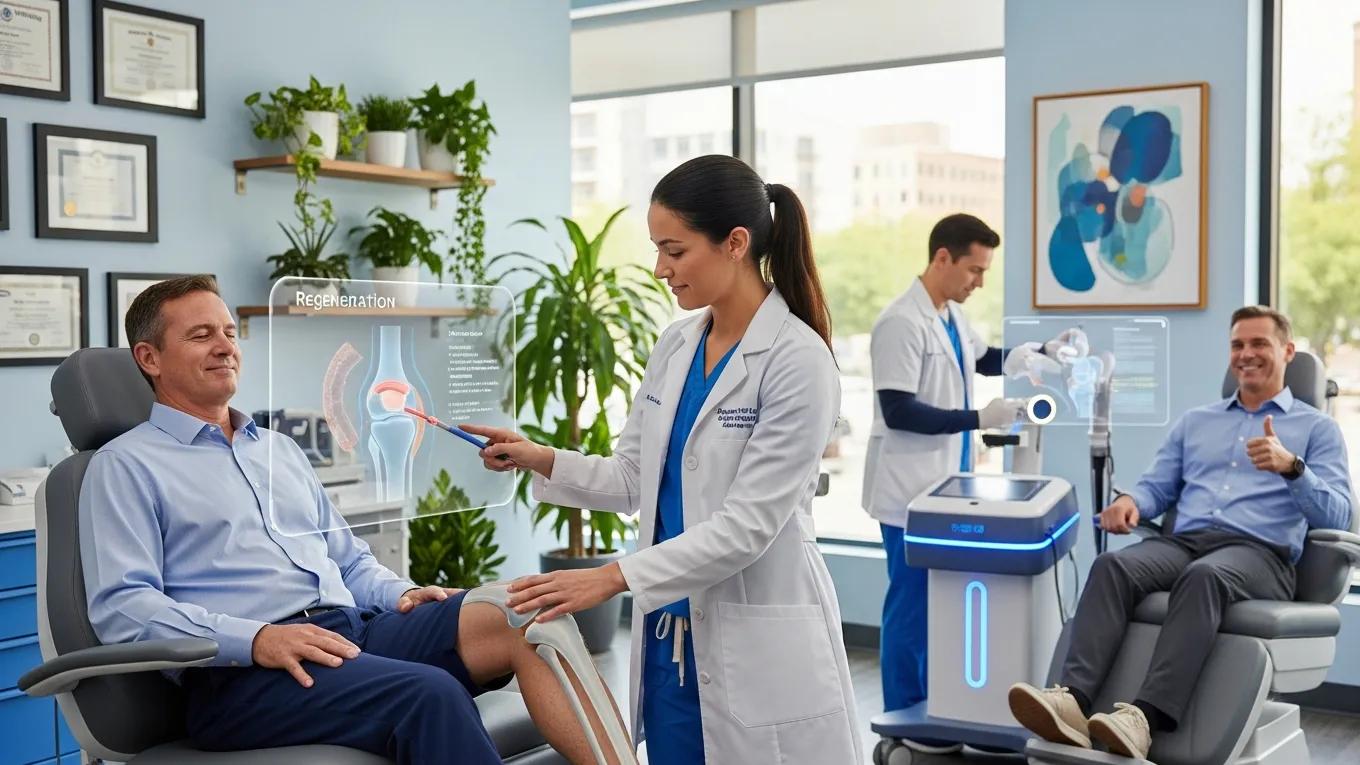
Regenerative medicine uses the body’s natural healing processes to repair or replace damaged joint tissues. Rather than masking symptoms, these therapies aim to address the underlying causes of pain and loss of function. For many patients with chronic joint pain, regenerative options can restore mobility and improve daily life when conventional treatments fall short. This article reviews non-invasive therapies, evidence of effectiveness, patient benefits, and the services Pivotal Health Center provides with a focus on patient-centred care.
Non-invasive regenerative treatments reduce recovery time while stimulating repair. These approaches are often chosen as alternatives to surgery or long-term medications and support natural healing and overall wellness. Common non-invasive options include the therapies listed below.
Patients seeking these options are often referred to specialised clinics, such as Pivotal Health Center, where treatments are delivered within a structured care plan.
Clinical studies and patient-reported outcomes support the effectiveness of regenerative therapies for joint pain. Many reports show substantial improvements in pain and function, with success rates cited above 80% in some series. Evaluations typically compare baseline and follow-up measures of pain, mobility, and daily function.
Evidence suggests regenerative treatments can offer more durable relief than strategies that only address symptoms, which underlines the value of early, evidence-based intervention in progressive joint disease.
This perspective is echoed in current research on regenerative medicine for spine pain, emphasizing its potential to restore physiological homeostasis and anatomical function.
Regenerative Medicine for Spine Pain: PRP & Stem Cells
Regenerative medicine targets mechanical, degenerative, and inflammatory contributors to pain by using autologous preparations such as platelet-rich plasma, mesenchymal stem cells (from adipose tissue or bone marrow aspirate concentrates), and growth factors. These interventions use guided injection of regenerative media to reduce inflammation and aim to reverse the degenerative cascade, with the goal of restoring normal cellular composition (physiologic homeostasis) and anatomical function to improve pain and function.
Current review of regenerative medicine therapies for spine-related pain, N Strand, 2024

Regenerative therapies can deliver several meaningful benefits for patients with joint pain. These treatments often reduce symptoms while supporting the tissue repair needed for longer-term improvement in function and activity levels.
Pivotal Health Center provides individualized care plans that align treatments with each patient’s specific goals and clinical needs.
Patient narratives often document measurable improvements in pain and mobility after regenerative treatment. These accounts describe both the physical recovery and the practical benefits patients regain in daily life.
Many patients report renewed ability to perform activities they value, from family time to recreational pursuits, illustrating the real-world impact of these therapies.
Regenerative medicine stimulates the body’s repair systems to heal damaged tissues rather than only treating symptoms. Treatments use biologically active components to encourage cellular repair, reduce inflammation, and support tissue regeneration.
For example, PRP therapy delivers concentrated platelets to an injured site; those platelets release growth factors that promote cellular repair, modulate inflammation, and support healing processes. Understanding these mechanisms helps explain clinical improvements seen after treatment.
Key regenerative therapies employ different biological mechanisms to restore joint function. Each option is selected based on the patient’s condition, treatment goals, and clinical evidence supporting its use.
Clinicians tailor these therapies to patient-specific indications to optimise outcomes and safety.
Regenerative treatments work through coordinated cellular processes. Key mechanisms include the action of growth factors, stem cell differentiation, and modulation of inflammatory pathways—each contributing to tissue repair and improved joint function.
Recognising these mechanisms clarifies why regenerative approaches can produce lasting improvements in pain and function.
Pivotal Health Center provides a range of regenerative options that use the body’s healing capacity to treat joint pain. The clinic offers evidence-based therapies within an integrated care framework.
These services are combined with individualised treatment planning to maximise effectiveness and support patient recovery.
PRP therapy begins with a small blood draw, which is then processed in a centrifuge to separate and concentrate the platelets. The prepared PRP is injected into the affected joint or tissue under sterile conditions.
The benefits of PRP therapy include:
This process highlights how PRP can support tissue repair and improve clinical outcomes when indicated.

Chiropractic care supports regenerative treatments by addressing spinal alignment and biomechanics, which can enhance joint function and mobility. Proper alignment reduces compensatory stress and can improve the effectiveness of cellular-level therapies.
When integrated into a comprehensive plan, chiropractic interventions can relieve tension, improve joint mechanics, and support circulation to assist overall healing.
Regenerative medicine is appropriate for many patients with chronic joint pain, particularly those seeking alternatives to surgery or long-term medication. Ideal candidates include people with osteoarthritis, sports injuries, or persistent pain that has not responded to standard treatments.
A clinical consultation at a specialised centre like Pivotal Health Center determines individual suitability and produces a personalised treatment plan based on medical history and diagnostic findings.
Regenerative medicine can be used for a variety of chronic joint and neuropathy conditions. Commonly treated problems include degenerative and inflammatory joint diseases as well as tendon and soft tissue injuries.
These conditions often respond well to regenerative strategies when selected and applied appropriately.
As with any medical intervention, regenerative therapies have contraindications and safety considerations. Patients should discuss allergies, current medications, and any chronic health issues with their provider to confirm suitability.
A detailed pre-treatment assessment and informed consent process help manage risks and ensure the chosen therapy is appropriate for each patient.
The patient pathway typically begins with an initial consultation to review medical history, symptoms, and diagnostic imaging, followed by a tailored treatment plan. This structured approach prioritises safety and measurable outcomes.
During treatment, patients can expect:
Clear communication and scheduled follow-ups ensure patients understand each step and receive care adjusted to their progress.
Recovery varies with the individual and the treatment. Initial post-procedure recovery often takes 24–72 hours, while noticeable improvements in pain and mobility commonly appear over a period of weeks.
Following provider instructions for activity modification and follow-up care helps optimise healing and reduce the risk of complications.
Patients often experience meaningful reductions in pain, improved joint range of motion, and better overall function after regenerative therapy. These clinical gains frequently translate into a higher quality of life and a return to valued activities.
Such outcomes reflect the potential of regenerative approaches when applied within a comprehensive care plan.
Patients commonly ask about effectiveness, safety, and treatment duration. These topics help guide informed decision-making and align expectations with clinical evidence.
Addressing these questions during consultation ensures patients make choices that reflect their goals and clinical suitability.
When performed by experienced clinicians, stem cell therapy is considered a promising alternative to conventional treatments for joint pain. It typically involves less recovery time than surgery and carries a favourable safety profile in properly selected patients.
Clinical studies suggest stem cell treatments can provide sustained pain relief and functional improvement, positioning them as a viable option alongside established therapies.
Chiropractic care complements regenerative therapies by improving spinal and joint alignment, which can reduce abnormal stress on affected tissues. This structural support may enhance the biological repair initiated by regenerative injections.
Coordinated care between chiropractors and medical specialists creates a comprehensive plan that supports recovery and functional restoration.
Scheduling a consultation at Pivotal Health Center is straightforward: contact the clinic to discuss symptoms, review treatment options, and arrange an initial evaluation. Staff are available to answer questions about therapies and preparation for visits.
Patients can call the clinic to request more information or book an appointment and receive personalised guidance on next steps.
Begin by arranging an initial consultation to discuss symptoms and goals. A thorough health assessment follows to determine eligibility and to design a personalised treatment plan.
Following these steps helps ensure a safe, measured approach and optimises the likelihood of beneficial outcomes from regenerative therapy.
Pivotal Health and Wellness is conveniently located at 2290 10th Ave N Suite 102, Lake Worth, FL 33461. This central location enables easy access for clients seeking comprehensive healthcare solutions, including advanced regenerative medicine therapy for joint pain relief. For more information, patients can call (561) 770-1280 to discuss their treatment options and schedule consultations.
During a PRP session, a small blood sample is collected and processed in a centrifuge to concentrate platelets. The resulting PRP is then injected into the affected joint or tissue. Patients may feel mild discomfort at the injection site, but the procedure is typically quick and minimally invasive. Follow-up visits are scheduled to assess progress and treatment response.
Effectiveness is assessed using patient-reported outcome measures and clinical evaluations. Patients complete questionnaires on pain and function, and clinicians may use physical exams and imaging such as ultrasound or MRI to track structural changes. Aggregated study data often report improvement rates, with many series indicating over 80% benefit in pain and mobility.
Optimising recovery involves a balanced diet rich in healing nutrients, adequate hydration, and appropriate physical activity. Prescribed exercises from a physical therapist strengthen supporting muscles, while avoiding smoking and excessive alcohol supports tissue repair and treatment response.
There are no strict age limits; suitability is based on overall health and specific clinical factors rather than age alone. Patients across age groups may benefit, though healing capacity can vary and requires individual assessment to tailor treatment safely.
Costs vary by therapy type, condition severity, and clinic location. While upfront costs for treatments like PRP or stem cell therapy may be higher than a single conventional option, many patients realise long-term value through reduced medication needs and fewer invasive procedures, which can lower overall healthcare burden over time.
Yes. Regenerative therapies are often combined with complementary treatments such as physical therapy and chiropractic care. An integrated approach addresses both structural and cellular aspects of healing and should be planned in consultation with the treating team to ensure safety and coherence.
Multiple clinical studies and systematic reviews report significant improvements in pain, function, and quality of life with treatments such as PRP and stem cell therapy. Longitudinal research frequently shows benefits that persist longer than some traditional symptom-focused approaches, and review articles explain the biological mechanisms that underlie these effects.
Regenerative medicine provides clinically supported options to repair damaged joint tissues and restore function. Proven therapies such as PRP and stem cell treatments can deliver sustained pain relief and improved mobility for appropriately selected patients. Those seeking to regain an active lifestyle may find personalised care at centres like Pivotal Health Center to be the next step; contact the team to learn how regenerative therapies could fit your treatment plan.