
By Darren Lastofsky, Pivotal Health
Regenerative medicine uses the body’s own repair processes to treat injury and disease. It includes therapies such as stem cell treatment, platelet-rich plasma (PRP), laser therapy and shockwave therapy. These options aim to reduce chronic pain and support overall wellness while avoiding invasive procedures when possible. At Pivotal Health Center in Lake Worth, care is patient-focused and designed to speed recovery, limit side effects, and improve function. This article outlines the available regenerative approaches, typical results, and how they work alongside chiropractic care at Pivotal Health Center.
Regenerative medicine is a novel biotechnology used to treat mechanical, degenerative, and inflammatory conditions that contribute to pain.
Regenerative Medicine: Targeting Pain and Restoring Function
Regenerative medicine is a novel biotechnology targeting mechanical, degenerative, and inflammatory conditions believed to cause pain. Preparations including platelet-rich plasma, mesenchymal stem cells (adipose tissue and bone marrow aspirate concentrates), and growth factors are derived from an autologous donor. The goal of intervention through guided injection of the regenerative media is to reduce inflammation and reverse the degenerative cascade in hopes of restoring normal cellular composition (physiologic homeostasis) and anatomical function to improve pain and function.
Current review of regenerative medicine therapies for spine-related pain, N Strand, 2024
Regenerative medicine covers several approaches that activate natural repair. Each method has specific applications and expected benefits for patients with pain or tissue damage.
Stem cell therapy delivers undifferentiated cells to injured tissue to encourage repair. These cells can support recovery in joints, soft tissues and areas affected by arthritis. The treatment aims to reduce inflammation, restore damaged tissue structure, and improve mobility and function. Many patients report decreased pain and better movement after a tailored course of treatment.
PRP uses a patient’s own blood to concentrate platelets and growth factors, which are then injected into the injured area. This enhances the body’s repair response and is commonly used for tendon, ligament and joint problems. Improvements in pain and function typically develop over weeks as the tissue regenerates.
Both platelet-rich plasma (PRP) and mesenchymal stem cells (MSCs) serve as core tools in regenerative medicine to help restore anatomical function in degenerative conditions.
PRP and MSCs in Regenerative Medicine for Pain
Platelet-rich plasma (PRP) is one of the main pillars of regenerative medicine, as its release of bioactive proteins supports the aim of RM of restoring the anatomical function in degenerative conditions. Mesenchymal stem cells (MSCs) are multipotent stem cells, multipotent progenitor cells, or marrow stromal cells found in various body tissues, including bone marrow, lung, and adipose tissue.
Regenerative medicine: pharmacological considerations and clinical role in pain management, AN Edinoff, 2022
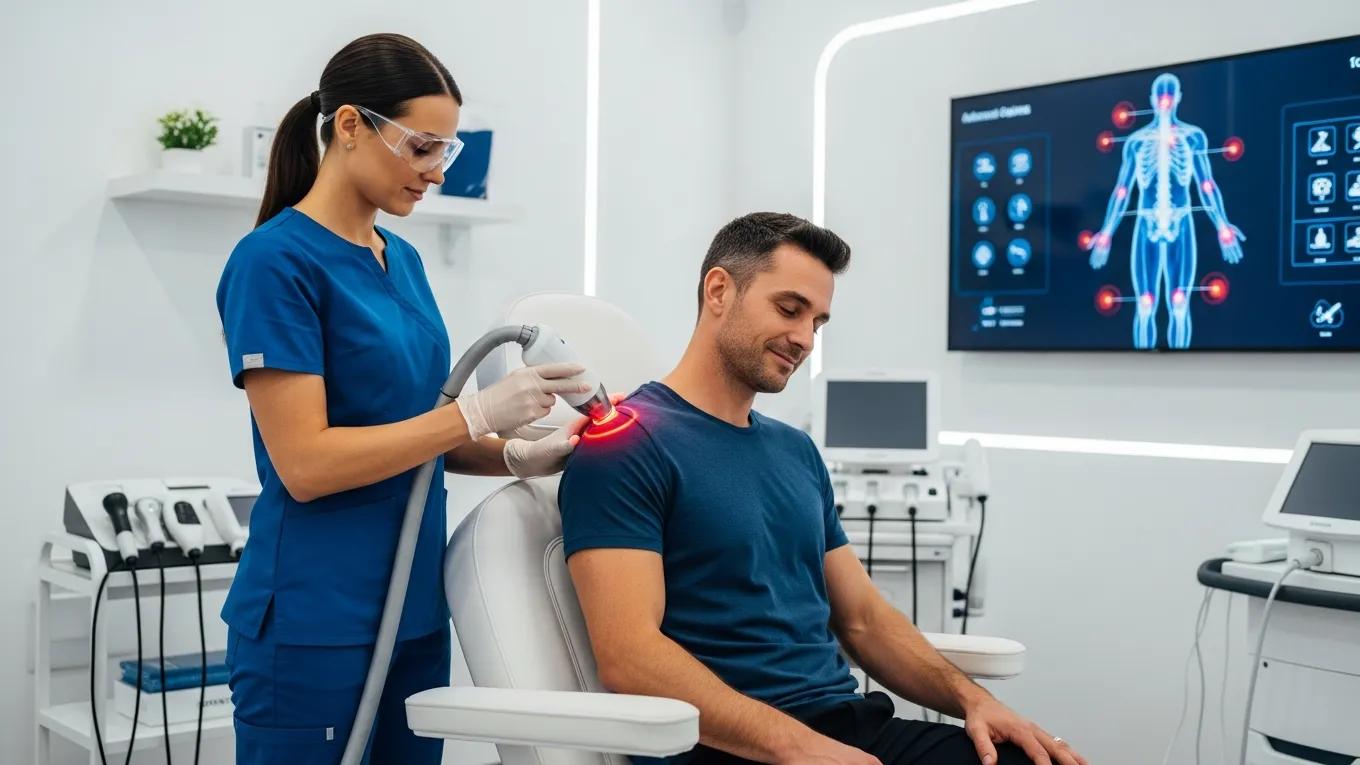
Therapeutic lasers deliver focused light to injured tissue to reduce inflammation and accelerate cellular repair. This non-invasive option improves circulation and supports faster recovery, making it suitable for athletes and patients with chronic pain who prefer to avoid surgery. Laser therapy has a favourable safety profile and integrates well into broader pain management plans.
Shockwave therapy applies acoustic waves to stimulate healing in musculoskeletal injuries. The waves increase blood flow and promote cellular renewal in the targeted area. It is effective for conditions such as plantar fasciitis and tendinopathy, and many patients experience marked pain relief and functional improvement after a series of treatments.
Combining modalities—such as PRP with stem cell therapy—can address different aspects of tissue repair at once. This multimodal strategy often produces synergistic effects, improving overall outcomes and patient satisfaction without adding undue risk.
Regenerative approaches treat root causes of pain rather than only masking symptoms. By supporting the body’s repair mechanisms, these therapies can offer durable improvements in pain and function and reduce dependence on long-term medications.
Researchers and clinicians are developing biomaterials that provide biochemical and structural cues to enhance regenerative effects and improve treatment targeting.
Biomaterials and Regenerative Therapies for Chronic Pain Management
Regenerative therapies have been developed to repair damaged tissues in back, joint, and shoulder that lead to chronic and inflammatory pain. Novel regenerative biomaterials have been designed to incorporate biochemical and physical pro-regenerative cues that augment the efficacy of regenerative therapies. New biomaterials improve target localization with improved tunability for controlled drug delivery, and injectable scaffolds enhance the efficacy of regenerative therapies through improving cellular migration.
Biomaterials and regenerative medicine in pain management, X Gu, 2022
Patients can expect reductions in pain, improved mobility, and a better quality of life. Outcomes vary by condition and individual response, so treatment plans are customised. Many patients notice meaningful change within weeks, with continued improvement over months.
Regenerative medicine offers contemporary, evidence-informed options for pain management and recovery. With therapies from stem cells to PRP and laser applications, patients in Lake Worth can access non-invasive choices at Pivotal Health Center. For personalised guidance, schedule a consultation to review which therapies best align with your health goals.
In Lake Worth, options include stem cell therapy and PRP therapy among other advanced treatments. Each method leverages the body’s healing capacity and is adapted to the patient’s specific condition and goals.
Pivotal Health Center provides non-invasive options such as PRP, stem cell and laser therapies. These interventions are intended to promote natural healing, reduce pain and support long-term wellness without surgery.
Regenerative treatments use cells, growth factors and biomaterials to stimulate tissue regeneration and repair. These elements encourage cellular activity that reduces pain and restores function.
Chiropractic care enhances musculoskeletal alignment and function, which complements regenerative therapies by creating a favourable environment for healing. This combined approach supports recovery from injury and improves outcomes. For more information on how regenerative medicine can address nerve issues, learn about neuropathy treatment options available.
Chiropractic management addresses structural imbalances and movement patterns that can sustain pain. When integrated with regenerative therapies, it contributes to more comprehensive, long-term relief and improved function in chronic conditions.
Combining chiropractic care with regenerative modalities recognises that pain has multiple causes. A coordinated plan targets tissue repair, alignment and function to deliver better, more durable results than a single approach alone.

Patients with neuropathy may be offered stem cell or PRP therapies at Pivotal Health Center. These treatments are used to support nerve repair and reduce neuropathic symptoms.
Regenerative therapies deliver growth factors and reparative cells to affected nerves to encourage healing and restore function. The goal is to reduce symptoms such as pain and disorientation while improving overall nerve performance.
Patients treated for neuropathy at Pivotal Health can expect improvements in nerve function, symptom reduction and better daily function. Many report measurable relief after completing their recommended therapy course.
Wellness and weight-management programmes are offered alongside regenerative care to support overall recovery. These services help optimise health factors that influence healing and long-term outcomes.
Regenerative treatments typically have favourable safety profiles, limited downtime and the potential for lasting benefit. Recovery timelines vary by intervention but generally allow patients to return gradually to normal activities while healing progresses.
Patients frequently report benefits such as reduced pain, improved mobility and faster recovery compared with some traditional approaches.
These benefits support improved daily function and a higher quality of life.
Overall, these treatments are considered safe when performed by experienced clinicians. Side effects are usually mild and temporary. Recovery timelines depend on treatment type and the patient’s condition, typically ranging from several weeks to a few months.
Patients can access services at Pivotal Health Center by scheduling a consultation where clinicians assess individual needs and develop a personalised treatment plan.
During a consultation, expect a review of your medical history, symptoms and treatment goals. Prepare questions and any relevant imaging to make the visit as effective as possible.
Insurance coverage varies by plan and procedure. Patients should check with their insurance provider to determine available benefits and any out-of-pocket costs.
Regenerative medicine addresses many causes of chronic pain, including joint pain, arthritis, tendonitis, ligament injuries and sports-related damage. It can also benefit conditions such as neuropathy and degenerative disc disease by targeting tissue repair rather than only relieving symptoms.
Results depend on the therapy and the patient’s condition. Initial improvements are often seen within a few weeks, with gradual progress over several months. Recovery time is influenced by injury type, overall health, age and adherence to post-treatment guidance. Follow-up appointments assess progress and guide any adjustments.
These procedures are generally safe but can carry risks similar to other interventions, such as temporary pain, swelling or, rarely, infection at the injection site. Using autologous materials—your own cells or blood products—helps reduce immune risks. A thorough discussion with your provider will clarify risks specific to your treatment.
Yes. Regenerative therapies work well alongside physical therapy, chiropractic care and, when appropriate, surgical options. Combining approaches lets clinicians address both immediate symptoms and longer-term tissue repair, supporting more complete recovery. Pivotal Health Center teams collaborate with patients to develop integrated, individualised plans.
Clinical studies and trials demonstrate positive outcomes for many regenerative interventions in musculoskeletal and chronic pain conditions. Evidence continues to grow as techniques and materials improve. Discussing current research with a knowledgeable provider helps align treatment choices with the best available evidence for your condition.
Prepare your medical history, a list of current medications and details of prior treatments. Note your symptoms and treatment goals and bring any imaging (X-rays, MRIs) if available. Clear questions and relevant records make the consultation more productive and support a personalised treatment plan.
Regenerative medicine provides evidence-informed, non-invasive options to address pain and support recovery by harnessing the body’s healing capacity. Therapies such as stem cell treatments and PRP can reduce pain and improve mobility for appropriate candidates. To determine the most suitable plan for your needs, schedule a consultation at Pivotal Health Center to discuss personalised treatment options and expected outcomes.